Beyond Lift‑and‑Shift: Using MG Systems’ 6‑D Framework for App Modernization with Containers, Kubernetes, and Serverless
In today’s rapidly evolving technological landscape, simply lifting and shifting legacy applications to the cloud no longer suffices. Enterprises seek innovative, scalable, and efficient solutions to modernize their digital infrastructure—enter MG Systems’ 6‑D Framework. This comprehensive approach empowers organizations to transform their applications beyond basic migration, leveraging containers, Kubernetes, and serverless architectures to unlock new levels of agility, cost efficiency, and business value.
The Limitations of Lift‑and‑Shift Strategies
Many organizations initially adopt lift‑and‑shift strategies due to perceived simplicity and quick deployment. However, these methods often lead to sub-optimal cloud utilization, higher operational costs, and limited scalability. Legacy apps designed for on-premises environments struggle to perform efficiently in cloud-hosted architectures, resulting in bottlenecks, increased latency, and difficulty in implementing modern DevOps practices.
Furthermore, lift‑and‑shift does not address underlying issues such as outdated codebases, monolithic architectures, or lack of scalability, which are critical factors for digital transformation success. As a result, many companies find themselves back at square one, seeking more effective modernization strategies.
The Need for a Strategic Framework
To truly harness the power of cloud computing, organizations require a structured, repeatable process that guides them through refactoring, replatforming, and evolving their applications. This is where MG Systems’ 6‑D Framework comes into play. It provides a disciplined methodology designed specifically for modernizing applications in a cloud-native ecosystem.
What is MG Systems’ 6‑D Framework?
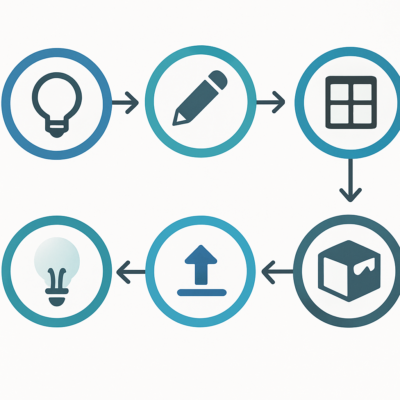
The 6‑D Framework is a strategic and operational blueprint integrating six distinct phases: Discover, Define, Design, Develop, Deploy, and Deliver. This process ensures each modernization initiative is aligned with business goals, technical best practices, and market demands.
By systematically applying this framework, businesses can transition from static lift‑and‑shift models to dynamic, containerized, and serverless environments that maximize agility and cost savings.
Core Pillars of the 6‑D Framework
1. Discover
The journey begins by thoroughly assessing existing applications, infrastructure, dependencies, and business requirements. Advanced tools and techniques, such as automated code analysis, dependency mapping, and workload profiling, help identify opportunities for refactoring.
2. Define
This phase involves setting clear objectives aligned with strategic business outcomes. Key performance indicators (KPIs), security considerations, compliance requirements, and cost targets are defined to guide subsequent phases.
3. Design
Design focuses on architecting a cloud-native solution that leverages containers, Kubernetes, and serverless components. It entails creating detailed architecture diagrams, selecting appropriate platform services, and ensuring scalability, resilience, and security.
4. Develop
Development centers on transforming monolithic codebases into modular, containerized applications. Using microservices principles, APIs, and CI/CD pipelines, developers build scalable, maintainable code optimized for modern architectures.
5. Deploy
Deployment utilizes automated orchestration tools to deploy containers into Kubernetes clusters or serverless platforms. Infrastructure as code (IaC) practices ensure repeatability, version control, and environment consistency.
6. Deliver
The final phase emphasizes monitoring, optimizing, and continuously improving application performance. Incorporating MLOps, observability, and governance ensures the system adapts swiftly to changing business needs.
Implementing the 6‑D Framework: A Step-by-Step Guide
Step 1: Comprehensive Assessment
Start by conducting application portfolio analysis. Use tools like SonarQube for code quality, AWS Well-Architected Tool for cloud readiness, and dependency analyzers for mapping interdependencies.
Step 2: Establish Clear Goals
Align modernization objectives with business KPIs such as reducing TCO, improving deployment frequency, or enhancing user experience. Document compliance and security standards.
Step 3: Design the Cloud-Ready Architecture
Create a blueprint that incorporates container orchestration with Kubernetes, serverless functions for event-driven tasks, and API gateways for communication.
Step 4: Code Refactoring and Containerization
Refactor legacy modules into microservices, containerize them using Docker or Podman, and set up CI/CD pipelines with tools like Jenkins or GitHub Actions.
Step 5: Orchestrate and Automate Deployment
Use Kubernetes manifests, Helm charts, or serverless deployment frameworks (e.g., AWS SAM, Azure Functions) to automate deployment processes, reduce errors, and accelerate rollout.
Step 6: Continuous Monitoring and Optimization
Implement observability platforms like Prometheus, Grafana, or DataDog. Use AIOps and AI/ML-driven analytics to spot anomalies, predict resource demands, and optimize cost.
Case Study: Modernizing Retail Forecasting Platform
A mid-market retail chain faced challenges with legacy forecasting applications built on outdated architecture. Using MG Systems’ 6‑D Framework, they migrated critical workloads to a Kubernetes-based container platform, incorporating serverless functions for real-time data processing.
Results included a 40% reduction in infrastructure costs, 3x faster deployment cycles, and improved forecast accuracy by 15%, directly impacting revenue growth.
The Future of App Modernization
As cloud technologies continue to evolve, frameworks like MG Systems’ 6‑D will become essential in guiding organizations through increasingly complex transformation landscapes. Embracing automation, AI/ML, and serverless architectures enables businesses to remain competitive, agile, and responsive.
Final Thoughts
Modernizing applications beyond lift‑and‑shift requires a strategic, disciplined approach. MG Systems’ 6‑D Framework provides the blueprint to navigate this transformation successfully. By embracing containerization, Kubernetes, and serverless architectures, organizations position themselves for sustainable growth in the digital era.