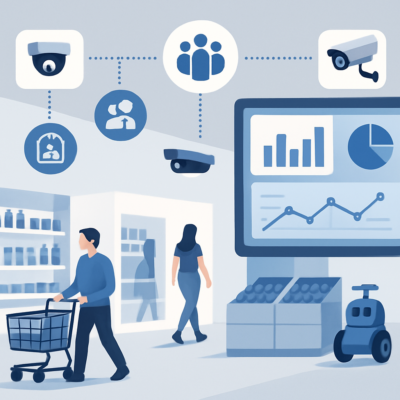
In today’s highly competitive retail landscape, leveraging cutting-edge technology is essential for staying ahead. Among these innovations, computer vision stands out as a transformative force capable of revolutionizing how retail businesses operate, analyze customer behavior, and boost return on investment (ROI). From inventory management to personalized customer experiences, computer vision is opening new avenues for retail success.
The Rise of Computer Vision in Retail
What is Computer Vision?
Computer vision is a branch of artificial intelligence (AI) that enables machines to interpret and make decisions based on visual data, much like human vision. It involves complex algorithms and deep learning models that analyze images and videos to extract meaningful insights.
Why is Computer Vision Critical for Retail?
Retailers face numerous challenges, including inventory shrinkage, long checkout lines, poor customer engagement, and supply chain inefficiencies. Computer vision offers solutions to these issues through real-time visual analytics, automation, and predictive capabilities.
Market Growth & Adoption
According to recent industry reports, the global computer vision market is projected to reach $20 billion by 2027, growing at a CAGR of 24%. Retail sector adoption is accelerating, driven by advancements in sensor technology, AI, and data processing capabilities.
How Computer Vision Transforms Retail Operations
Inventory Management & Loss Prevention
Computer vision systems can automatically monitor shelves, track stock levels, and detect misplaced or missing items. For example, AI-powered cameras can identify stockouts or theft in real-time, reducing inventory shrinkage.
Checkout & Queue Management
Facial recognition and visual scanning enable cashier-less checkout systems, reducing wait times and enhancing customer satisfaction. Amazon Go exemplifies this approach, where cameras track items taken from shelves.
Store Analytics & Customer Insights
Visual data analysis helps retailers understand customer flow, dwell times, and popular areas within stores. This data supports layout optimization and targeted merchandising.
Safety & Compliance
Computer vision aids in ensuring store safety protocols, such as social distancing, mask compliance, and crowd control, especially critical during health crises.
Enhancing Customer Experience through Computer Vision
Personalized Shopping Experiences
By analyzing customer demographics, behaviors, and preferences via in-store cameras, retailers can tailor marketing messages and product recommendations.
Virtual Fitting Rooms & Augmented Reality
Computer vision powers virtual fitting rooms, enabling customers to try on clothes virtually, increasing engagement and reducing return rates.
Improved Customer Service
AI-driven visual systems can assist staff in locating products quickly, and facilitate self-service options, streamlining the shopping journey.
Measuring ROI & Business Impact
Increased Sales & Reduced Costs
Implementing computer vision solutions can lead to significant ROI through increased sales, reduced theft, and lower operational costs. Case studies indicate retailers achieving up to 15% sales uplift following AI integration.
Data-Driven Decision Making
Visual analytics provide actionable insights for inventory planning, marketing campaigns, and staff deployment, leading to more effective strategies.
Competitive Advantage
Early adoption of computer vision technology positions retailers as innovative leaders, attracting tech-savvy customers and improving brand loyalty.
Practical Implementation Strategies
Step 1: Assess Business Needs
Identify specific pain points such as inventory issues, long checkout lines, or poor customer engagement.
Step 2: Select Suitable Technologies
Choose hardware (cameras, sensors), software platforms, and AI models that align with your objectives.
Step 3: Pilot Projects & Proof of Concept
Start with small-scale pilots to evaluate effectiveness and refine deployment strategies.
Step 4: Data Integration & Infrastructure
Implement robust data management systems, including MLOps practices, to handle streaming data securely and efficiently.
Step 5: Staff Training & Change Management
Educate staff on new systems and processes to ensure smooth adoption.
Step 6: Measure & Optimize
Continuously monitor KPIs, analyze results, and optimize machine learning models for better performance.
Real-World Case Studies
Case Study 1: Walmart’s Inventory Optimization
Walmart employed computer vision cameras in stores to monitor stock levels, reduce stockouts by 25%, and cut inventory management costs by 20%. The system provided real-time alerts and automated reorder processes.
Case Study 2: Sephora’s Virtual Try-On
Sephora integrated AR-powered virtual fitting rooms driven by computer vision, increasing in-store engagement by 30% and boosting conversion rates.
Case Study 3: SoftBank’s Automated Surveillance
Using AI cameras for safety compliance and theft detection, SoftBank reduced shrinkage by 15% and improved compliance adherence during peak hours.
Tools & Resources for Retailers
- AI & Computer Vision Platforms: TensorFlow, OpenCV, AWS Rekognition
- Data Management & MLOps: Dataiku, Kubeflow, MLflow
- Sensor & Hardware Providers: Hikvision, Axis Communications
- Training Resources: Coursera, Udacity AI for Retail courses, vendor-specific tutorials
- Templates & Checklists: ROI assessment templates, implementation roadmaps, data privacy compliance checklists
The Future of Computer Vision in Retail
Emerging trends include integrating AI with IoT devices, enhancing predictive analytics, and adopting edge computing for faster insights. Retailers investing early in these areas will position themselves for sustained competitive advantage.
Conclusion
Adopting computer vision technology is not just a competitive edge but a necessity for modern retail success. By streamlining operations, enriching customer experiences, and leveraging data-driven insights, retailers can significantly improve ROI.


Pingback: doxycycline hyclate 100mg
Pingback: fluconazole 200 mg
Pingback: lasix 40 mg price
Pingback: xenical en español
Pingback: semaglutid tabletten rezeptfrei
Pingback: finasteride generic proscar
Pingback: para que sirve el sildenafil 50 mg en bebes
Pingback: cialis generic doses
Pingback: amazon minoxidil spray
Pingback: ivermectin PK research
Pingback: vardenafil vs sildenafil comparison notes
Pingback: sinusitis facial pressure