In today’s rapidly evolving digital landscape, industries such as healthcare and manufacturing face mounting pressure to innovate quickly while maintaining high standards of quality, safety, and efficiency. Leveraging cutting-edge technologies like computer vision integrated with edge‑ready cloud pipelines offers a profound opportunity to transform these sectors, enabling smarter decision-making, real-time insights, and scalable operations.
The Critical Need for Modernization in Healthcare and Manufacturing
Healthcare and manufacturing are traditionally characterized by complex processes, extensive data generation, and strict compliance requirements. Despite their differences, both sectors encounter shared challenges: increasing demand for operational efficiency, rigorous quality control, regulatory scrutiny, and the necessity to automate decision-making for speed and accuracy.
In healthcare, timely and accurate diagnostics, patient monitoring, and imaging analysis are crucial for better patient outcomes. Manufacturing, on the other hand, requires precise quality inspections, predictive maintenance, and supply chain optimization. Both sectors benefit immensely from real-time data processing and automation.
However, legacy systems often limit agility due to bottlenecks in data handling, latency issues, and inflexibility. Upgrading these systems with modern AI-powered solutions—particularly computer vision coupled with edge and cloud infrastructure—can effectively address these pain points.
The Promise of Computer Vision and Edge-Ready Cloud Pipelines
Computer vision, a subset of AI that enables machines to interpret visual information, is particularly transformative for these sectors. When paired with scalable, edge‑ready cloud pipelines, it offers advantages such as:
- Real-time Data Processing: Enabling instant insights from images, videos, or sensor data directly where the data is generated.
- Reduced Latency: Processing complex computations at the edge minimizes delays, crucial for time-sensitive applications like diagnostics or production line inspections.
- Enhanced Data Security: Sensitive healthcare data can be processed locally, reducing exposure risks during transmission.
- Scalability and Flexibility: Cloud pipelines support growth, allowing organizations to expand their AI capabilities without significant infrastructure overhaul.
Strategic Framework for Implementing Modern Solutions
Implementing a successful computer vision solution with edge‑ready cloud pipelines involves a structured approach:
1. Needs Assessment and Use Case Prioritization
Identify mission-critical processes that will benefit from AI‑powered visual analysis. For healthcare, this could involve radiology image analysis or patient monitoring. In manufacturing, defect detection or assembly verification are prime candidates.
2. Data Collection and Annotation
Gather diverse and representative data sets, ensuring they comply with regulatory standards, especially in healthcare. Annotate data accurately to train effective models.
3. Model Development and Validation
Develop robust computer vision models using frameworks like TensorFlow or PyTorch. Validate models rigorously against real-world scenarios to ensure reliability.
4. Edge Integration and Cloud Deployment
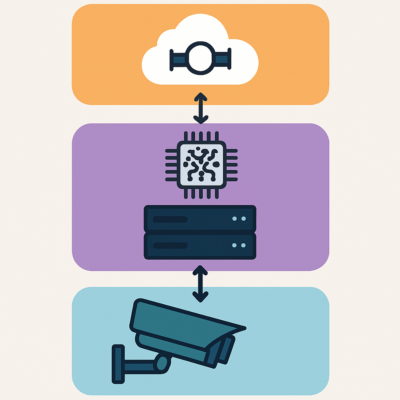
Design edge devices (like embedded cameras or sensors) capable of local processing for latency-critical tasks. Set up cloud pipelines for data aggregation, model updates, and long-term analytics.
5. Monitoring, Maintenance, and Compliance
Implement continuous monitoring for model drift and system health. Ensure compliance with healthcare standards (HIPAA, GDPR) and manufacturing quality standards.
Practical Implementation: Case Studies
Healthcare: AI-Assisted Diagnostic Imaging
A leading hospital integrated computer vision with edge deployment for real-time analysis of X-ray images. The system instantly flagged anomalies such as nodules, reducing diagnostic time by 40% and improving detection accuracy. The edge devices processed images locally for speed, while cloud analytics tracked model performance and updates.
Manufacturing: Quality Inspection on the Production Line
An industrial manufacturer deployed computer vision at the edge to identify defective products in real time. The system used high-speed cameras and AI algorithms to scrutinize each item with a 99.8% accuracy rate. Edge processing ensured near-instant feedback, preventing defective items from progressing further, thus saving costs and maintaining product quality.
Tools and Technologies to Accelerate Your Transition
- AI Frameworks: TensorFlow, PyTorch, OpenCV for model development
- Edge Devices: NVIDIA Jetson, Intel Movidius, Edge TPUs for localized processing
- Cloud Platforms: AWS IoT, Microsoft Azure IoT, Google Cloud IoT for pipeline management
- Security Solutions: End-to-end encryption, role-based access controls, secure boot processes to protect sensitive data
Best Practices for Successful Adoption
- Stakeholder Engagement: Involve clinicians, engineers, and compliance officers early.
- Pilot Projects: Start with small, high-impact use cases to demonstrate value.
- Interoperability: Ensure systems integrate seamlessly with existing infrastructure.
- Continuous Learning: Maintain a feedback loop for model refinement and system improvement.
Future Outlook and Industry Trends
Emerging trends indicate increasing adoption of explainable AI (XAI) for transparency, federated learning for privacy-preserving data use, and advances in miniaturized edge hardware. These developments further empower healthcare and manufacturing sectors to innovate with confidence.
MG Systems & Software LLC is uniquely positioned to guide organizations through this transformation, offering end-to-end consulting, customized deployment strategies, and ongoing support to ensure measurable ROI.